Piles and Hemorrhoids Meaning in Urdu — Causes, Symptoms and Treatment
Pain, itching, or bleeding around the back passage is embarrassing to discuss, so many people first search privately for hemorrhoids meaning in Urdu. In Urdu, hemorrhoids are called بواسیر (bawaseer), and in everyday English they are better known as piles. Hemorrhoids are swollen veins in the lower rectum and around the anus — similar to varicose veins in the legs. This article explains hemorrhoids meaning in Urdu in clear words, the difference between internal and external piles, their causes and symptoms, home care and fibre, and one essential safety message: rectal bleeding always needs a doctor's evaluation to rule out other, more serious causes.
Note: This article is for general information only and is not medical advice. Always consult a qualified doctor or pharmacist before using any medicine.
Hemorrhoids Meaning in Urdu — What Does It Mean?
To understand hemorrhoids meaning in Urdu, picture the veins around the anus and lower rectum as cushions that help seal the passage. When pressure in the area stays high for a long time — from straining, sitting, or pregnancy — these veins swell and stretch. The result is piles: lumps that may itch, ache, or bleed during bowel movements. Hemorrhoids are extremely common in adults in Pakistan, and mild cases often settle with simple changes to toilet habits and diet. They are not caused by sitting on cold surfaces or by spicy food itself, although spicy food can irritate symptoms once piles are present.
Internal and External Hemorrhoids
- Internal hemorrhoids form inside the rectum, where there are few pain nerves, so they often do not hurt. Their most common sign is bright-red blood on the stool, on tissue, or in the bowl. Larger internal piles can slip down (prolapse) during straining and may need to be gently pushed back.
- External hemorrhoids form under the skin around the anus, where pain nerves are plentiful. They cause itching, discomfort while sitting, and pain. If a clot forms inside one (a thrombosed hemorrhoid), it becomes a hard, very painful blue-purple lump that usually needs prompt medical attention.

Common Causes of Piles
The main driver of hemorrhoids is repeated pressure and straining:
- Chronic constipation and straining at stool — the single most important cause
- Sitting for long periods, especially long sessions on the toilet (often with a phone)
- Pregnancy, where the growing uterus increases pelvic pressure and constipation is common
- Low-fibre diet and low water intake, producing hard stools
- Heavy lifting and chronic coughing, which raise abdominal pressure
- Tightening with age, as supporting tissues weaken
Because constipation sits behind so many cases, treating it is central to recovery; our guide on constipation meaning in Urdu explains practical steps in simple words. Trapped gas and abdominal discomfort often accompany the same digestive pattern, as covered in bloating meaning in Urdu.
Symptoms of Hemorrhoids
Common symptoms include bright-red bleeding during or after passing stool, itching or irritation around the anus, pain or discomfort while sitting or passing stool, swelling or a lump near the anus, and a feeling that the bowel has not emptied completely. Pain is usually from external piles; painless bright-red bleeding is the typical internal pattern. Symptoms often come in flare-ups linked with constipation and settle between them.
Home Care and Fibre
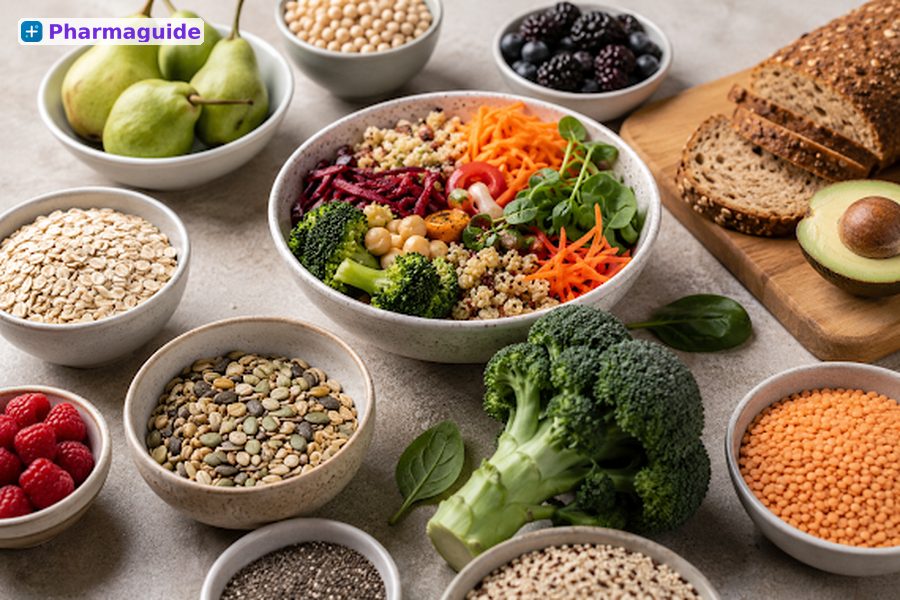
For mild symptoms, general self-care measures include increasing fibre gradually — whole-wheat flour, vegetables, fruits, lentils, and bran — together with enough water so stools stay soft; avoiding straining and not holding back the urge to pass stool; keeping toilet time short; gentle cleaning with water after stool instead of rough dry tissue; and warm water soaks (sitz baths) for comfort. Creams and suppositories for piles are sold widely, but they should be used on a pharmacist's or doctor's advice, only for short periods, and bleeding should never be assumed to be piles without an examination, as the next section explains.

Red Flag — Rectal Bleeding Always Needs a Doctor
This point cannot be repeated enough: any bleeding from the back passage must be evaluated by a doctor, even if piles seem the obvious explanation. The same symptom can come from anal fissures, inflammation of the bowel, polyps, or bowel cancer, and these cannot be separated by guesswork at home. Seek prompt medical care for bleeding that is heavy or repeated, dark or mixed-in blood, stools that turn black, unexplained weight loss, a change in bowel habit lasting weeks, severe anal pain, fever, or a lump that is very painful or does not settle. Doctors may examine the area and, when needed, arrange further tests such as a camera examination of the bowel.
Treatment Overview
Treatment is matched to severity: diet and habit changes for mild cases, medicines to keep stools soft, and procedures for persistent piles — such as rubber-band ligation for internal hemorrhoids, or surgery for large, prolapsed, or clotted piles. A painful clotted external hemorrhoid is often treated most effectively when seen within the first couple of days. Only an in-person assessment can decide which option fits an individual case.
Recovery after procedures is usually straightforward, but the long-term result depends on keeping stools soft afterwards; piles commonly return when constipation and straining continue, whatever treatment was used. That is why doctors pair every procedure with the same fibre, water, and toilet-habit advice given in the home-care section above.
Disclaimer
This article on hemorrhoids meaning in Urdu is for general information only and is not a substitute for professional medical advice, diagnosis, or treatment. Rectal bleeding always requires evaluation by a registered medical practitioner in Pakistan to rule out other causes. In an emergency, call Rescue 1122 or go to the nearest hospital immediately.